- Fiscal.ai
- Posts
- 🗞 This "AI Loser" Just Bought Back 30% of Its Shares In One Bite
🗞 This "AI Loser" Just Bought Back 30% of Its Shares In One Bite
Is the market wrong about this "AI loser"?


Braden Dennis & Ryan Henderson
April 19, 2026

Written by: Ryan Henderson & Braden Dennis
Happy Sunday! 👋
Today we’re taking a look at a once-loved internet darling that’s now deemed an “AI Loser”, Wix.
Let’s dive in!
Featured Story
This “AI Loser” Just Bought Back 30% of Its Shares In One Bite
The AI Threat
As of this writing, shares of Wix are down 81% from highs.
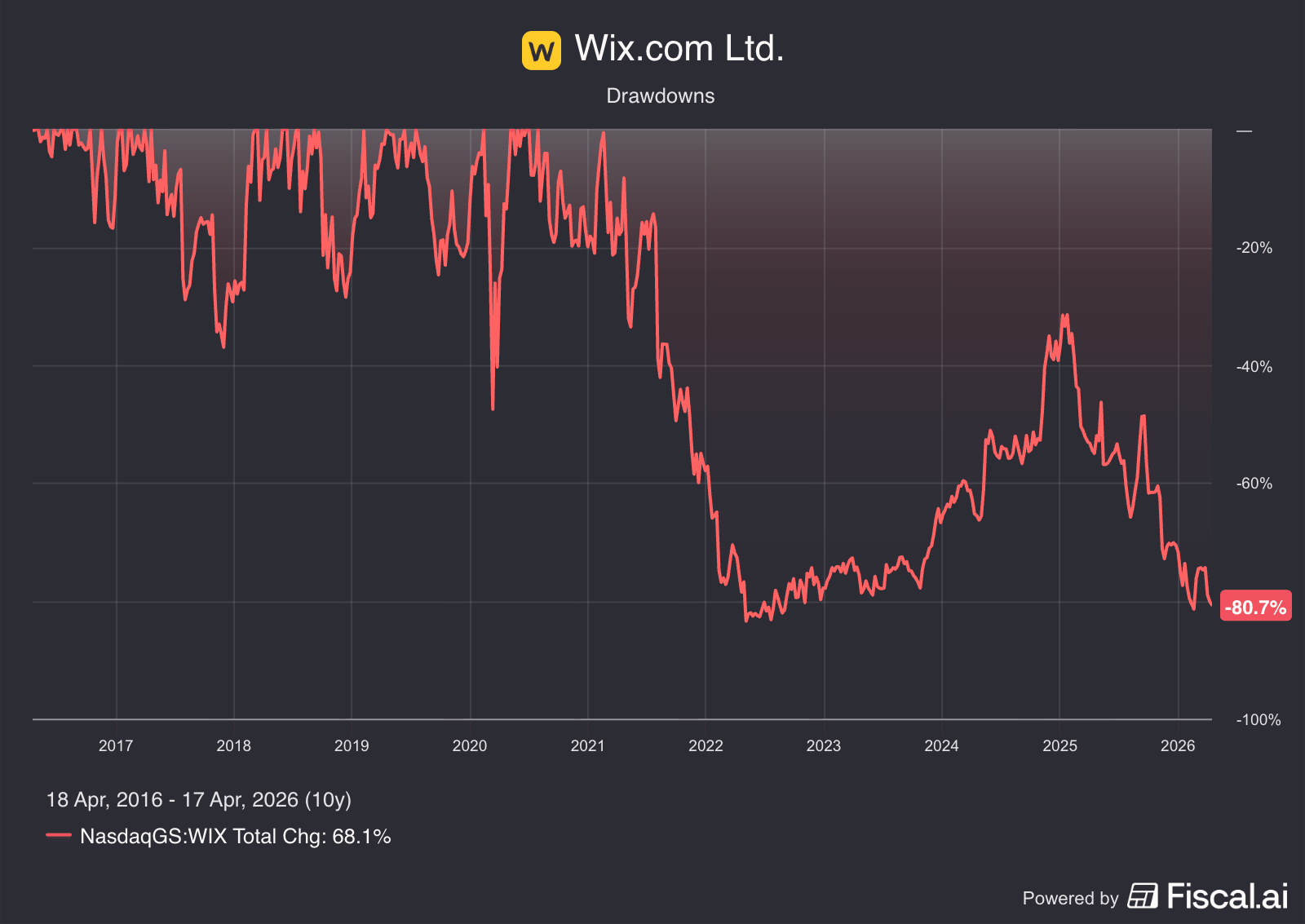
Over the last 2 years, Wix’s price to free cash flow multiple has dropped from 44x to 6.5x.
The culprit behind this collapse? AI.
The logic is simple. AI-based tools like Claude, OpenAI Codex, and Lovable now enable people to build websites with simple conversational prompts at very low cost. So why does someone need Wix?
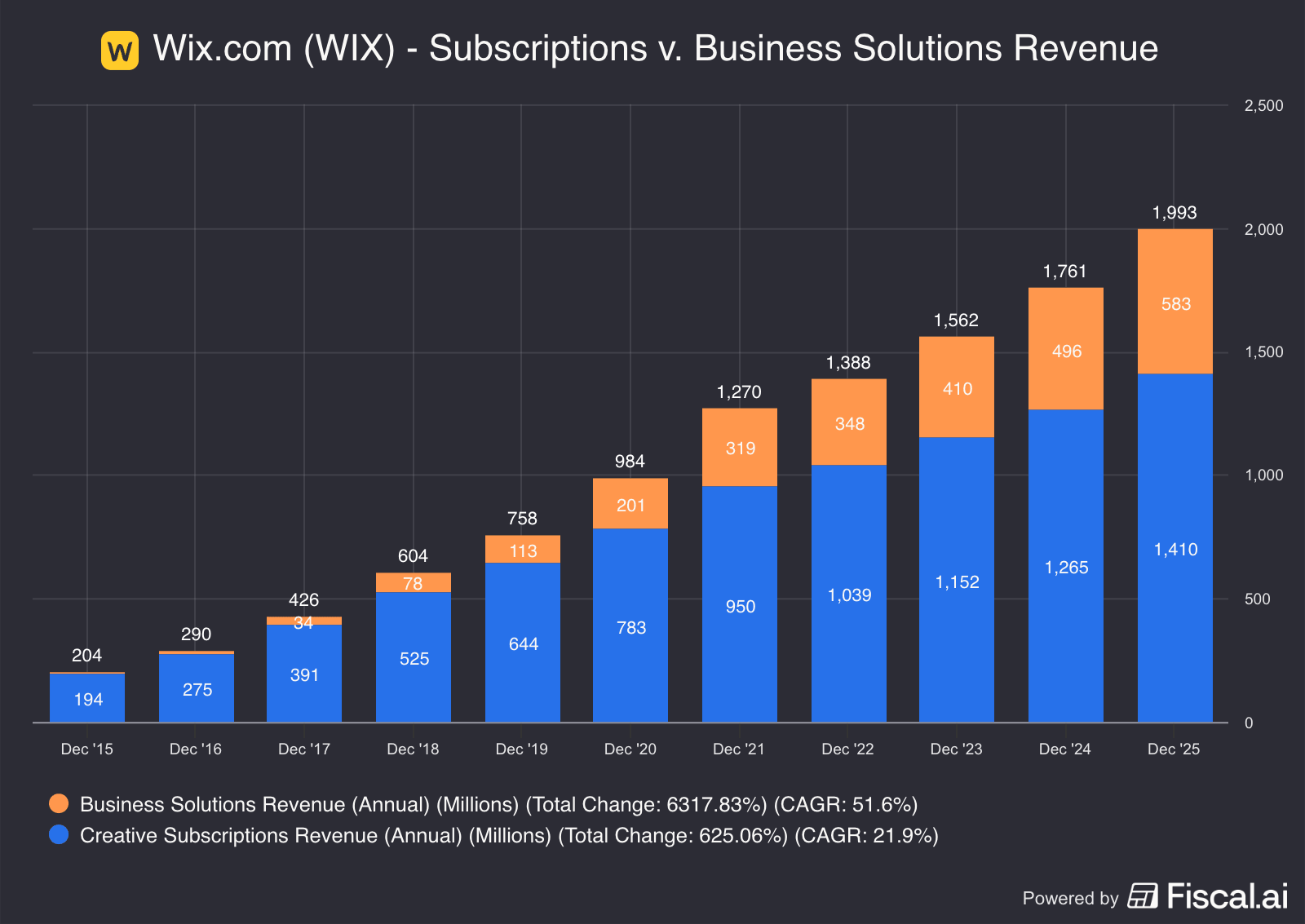
Not to mention, the rise of these AI tools has coincided with Wix’s first-ever drop in premium subscriptions.
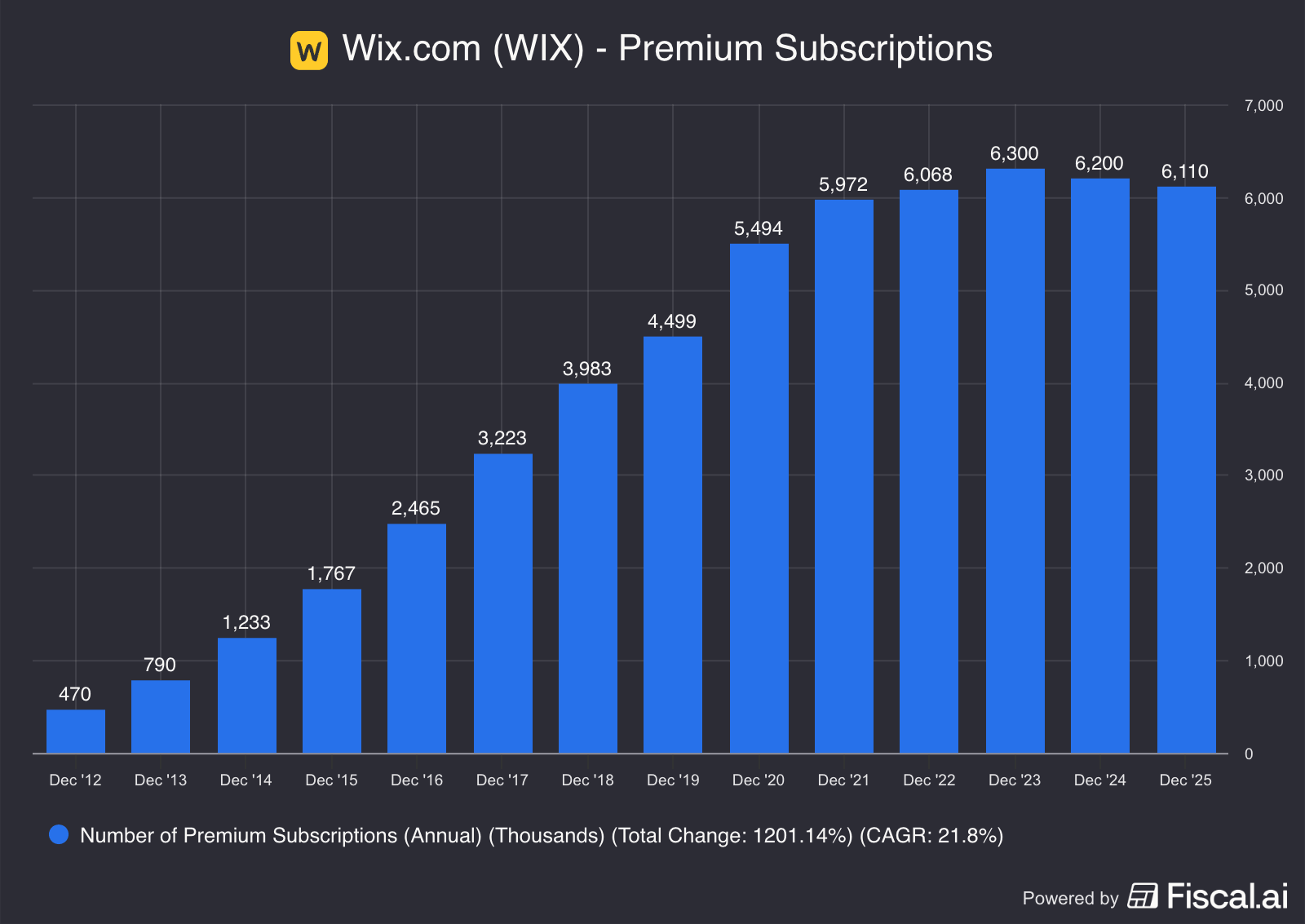
For someone looking at Wix for the first time, this decline in premium subs would be all the confirmation needed to support the “AI is destroying Wix” narrative.
However, there’s more to this than meets the eye.
In 2020, Wix saw their biggest jump in subscriptions ever. The reasoning is pretty straightforward. When COVID hit, pretty much every small business in the world needed to establish an online presence. The easiest place to do that? Wix.
From the start of 2020 to the end of 2021, Wix onboarded nearly 1.5 new subscribers. And since Wix offers lower prices for longer subscription durations, this probably locked in many businesses for several years. As the world emerged from the pandemic and businesses started operating in person again, a tail of low-intent COVID-era subscribers likely lapsed in 2023 and beyond.
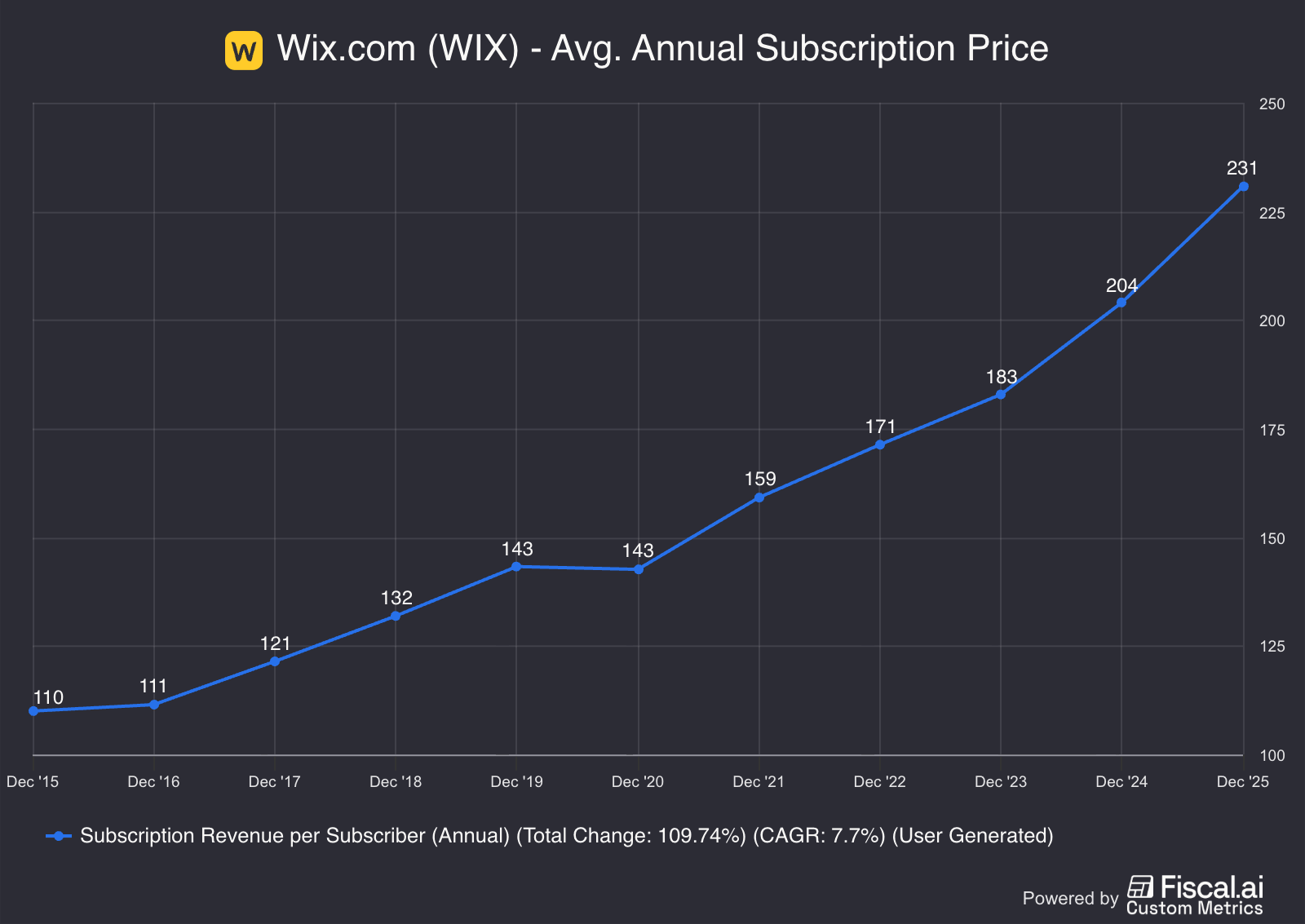
But beyond the post-COVID normalization, Wix has also been deliberately raising prices and reducing promotional discounts. Management has been clear that they are fine trading volume for quality. This is clear from the recent acceleration in revenue per subscriber.
Why wouldn’t a business switch to AI?
The AI worries for Wix make sense. If someone can build a website through Claude and not have to pay hosting fees to Wix, why wouldn’t they?
The only issue is, for real online or omnichannel businesses, this is much harder than it seems. There are several big hurdles to switching from Wix to a vibecoded solution
Starting from Scratch: Wix is a sort of a walled garden. There’s not really any easy way to take your work with you. You can’t export your page layouts, templates, or designs, so you’d essentially be starting from zero.
Hidden Complexities & Integrations: AI can build you 80% of the website you want fast, but the remaining 20% is much harder. Features like contact forms, logins, bookings ingestion & scheduling, and many other services require a ton of hidden backend work. Every 3rd party connection a business relies on through the Wix App Store would have to be re-established in the new environment.
SEO Reset: Many small businesses rely on traffic from search engines. Migrating away from a proprietary system like Wix carries high risk for online visibility since Wix uses URL structures that are hard to redirect.
“Code Rot”: Wix is always updating its code, security, and server environments to stay ahead. Once you own the code yourself, you are responsible for keeping it functional. Ask anyone that has built their own platform or website from scratch and they’ll tell you just how much time is dedicated to squashing bugs. Does the average small business owner have time for that?
It’s not to say it can’t be done, if you’re technically savvy, you can likely replicate a lot of components one at a time and piece them together to rebuild most of the required functionality. Granted, you’ll have to maintain that website, but still, it’s possible.
But for the average small business, say a restaurant owner who generates $1-$2 million in gross sales per year, is it really worth all the headache and business risk to switch off of Wix and save $300 per year? Most businesses would say no.
Capitalizing On Negative Sentiment?
On March 4th, Wix announced a $250 million private placement deal led by Durable Capital Partners. The terms? Durable Capital (and other investors) can buy Wix shares at a 5% discount to the March 4th closing price, and for every share they purchase they also receive a warrant to buy an additional 0.25 shares at a 25% premium.
One day later, on March 5th, Wix announced the commencement of a $1.75 billion Dutch auction tender offer. In other words, they were buying back as much stock as they could (up to $1.75 billion) at any price below $92 per share. The result? Wix was able to repurchase 17.6 million shares (out of 54.9 million total shares), or 32%, for ~$1.62 billion.
While this should be encouraging for investors, it’s hard not to find this sequence of events perplexing. Typically, the reason a company offers an investor a sweetheart deal (like Wix just did) is to instill market confidence through investor association. For example, Goldman Sachs did something similar with Warren Buffett during the depths of the Great Financial Crisis. But if you’re about to conduct a massive share repurchase, why would you want to instill investor confidence? Wouldn’t you want investor sentiment as low as possible so the company could buy shares at a lower price?
Regardless, the net outcome here is notable. Inclusive of the potential dilution from warrants and factoring in Wix’s ongoing stock-based compensation, Wix will still see a massive one-time reduction in their share count. Likely to the tune of ~30%.
So does AI spell the end of Wix?
We certainly know where Wix’s management team stands on the debate.
That’s all for this week.
If you have any questions about Fiscal.ai or any feedback for the newsletter, feel free to reply to this email!