- Fiscal.ai
- Posts
- 🗞 10 Insane Charts From Q4 Earnings
🗞 10 Insane Charts From Q4 Earnings
These are the 10 most insane charts we found from the Q4 earnings season.


Braden Dennis & Ryan Henderson
March 15, 2026

Written by: Ryan Henderson & Braden Dennis
Happy Sunday! 👋
This week we’re taking a look back at the 10 most insane charts from the Q4 earnings season.
Let’s dive in!
Featured Story
10 Insane Charts From Q4
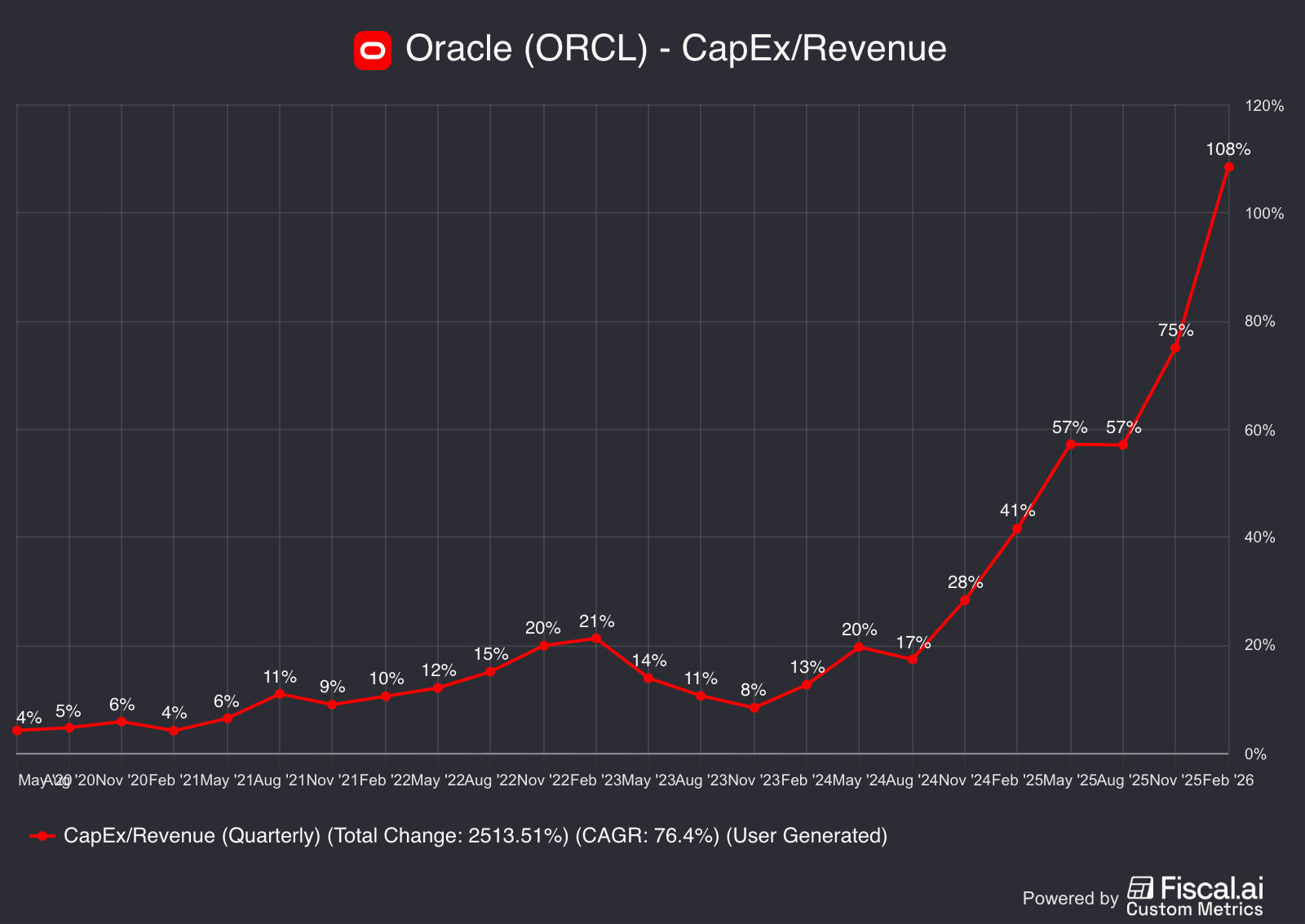
Over the last 2 years, Oracle has shifted from a capital-light, enterprise database business to literally one of the most capital-intensive businesses in the world.
With a shifting focus to infrastructure-as-a-service for AI companies (primarily OpenAI), they have increased their capital expenditures from $6 billion to $48 billion in just two years. As of the latest quarter, they are now spending all of their revenue (and then some) to finance the buildout of these data centers.
While the potential return on these investments remains unclear, it’s certainly causing a drag on their financial performance in the short term. For the first time in more than 20 years, Oracle is now reporting negative free cash flow.
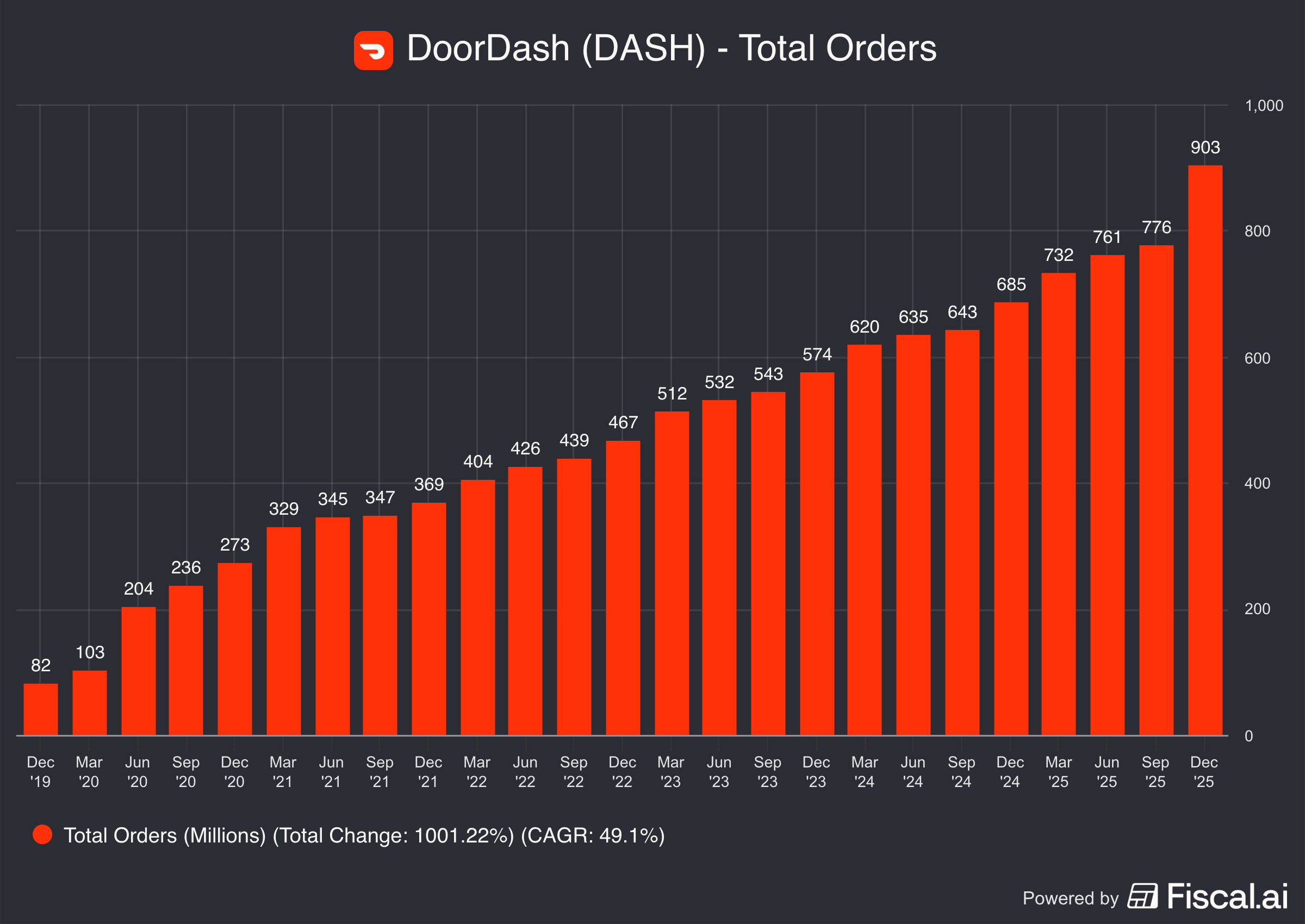
DoorDash reported 903 million total orders this quarter, up 32% from the same period a year prior. Excluding the addition of their recent Deliveroo acquisition, orders grew 20%.
Few companies seem to stir up as much debate as DoorDash. On one side of the aisle, people seem to frown upon the food delivery concept generally labelling it as “lazy”.
On the other side of the aisle, with every passing quarter, more and more people (now totaling 56 million monthly active customers) vote with their wallets that the convenience DoorDash provides is worthwhile.
This rapid growth propelled DoorDash to their first full year of positive GAAP operating income.
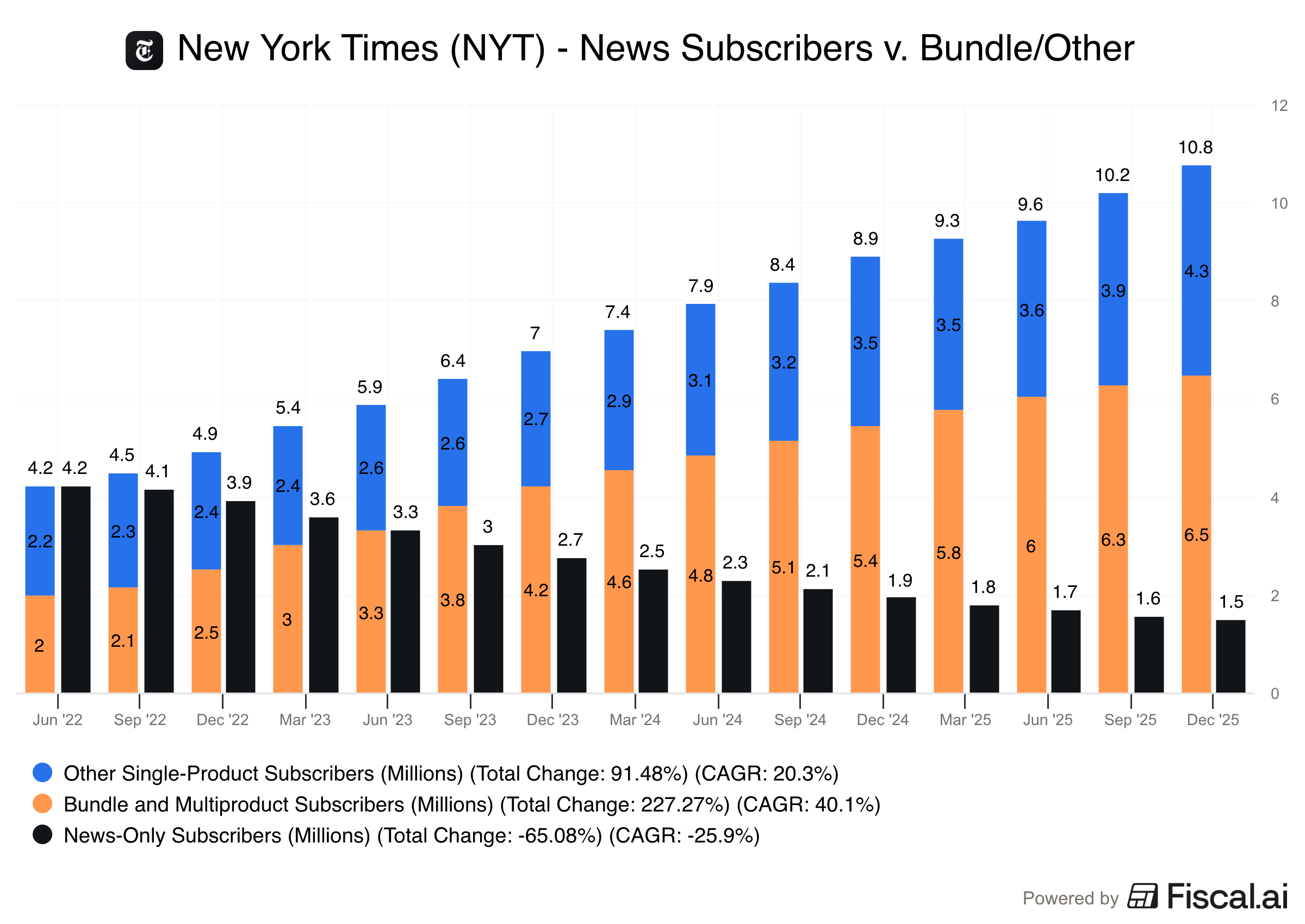
Over the last 4 years, the New York Times has successfully pivoted away from its 175 year history as a news-first company.
News-only subscribers have collapsed by 65%, while bundle and other single-product subscribers have increased by 157%. Now, only 1 in 10 subscribers are coming to the New York Times strictly for the news.
This successful pivot is a byproduct of the New York Times’ growth in mobile gaming (acquired Wordle in 2022), podcasts, cooking content, and personalized sports content (acquired The Athletic in 2022 as well).
This rebrand also helped revitalize the business from a profitability perspective. From 2007 to 2022, operating income at the New York Times went from $187 million to $202 million. Over the last 3 years, operating income has exploded to $432 million.
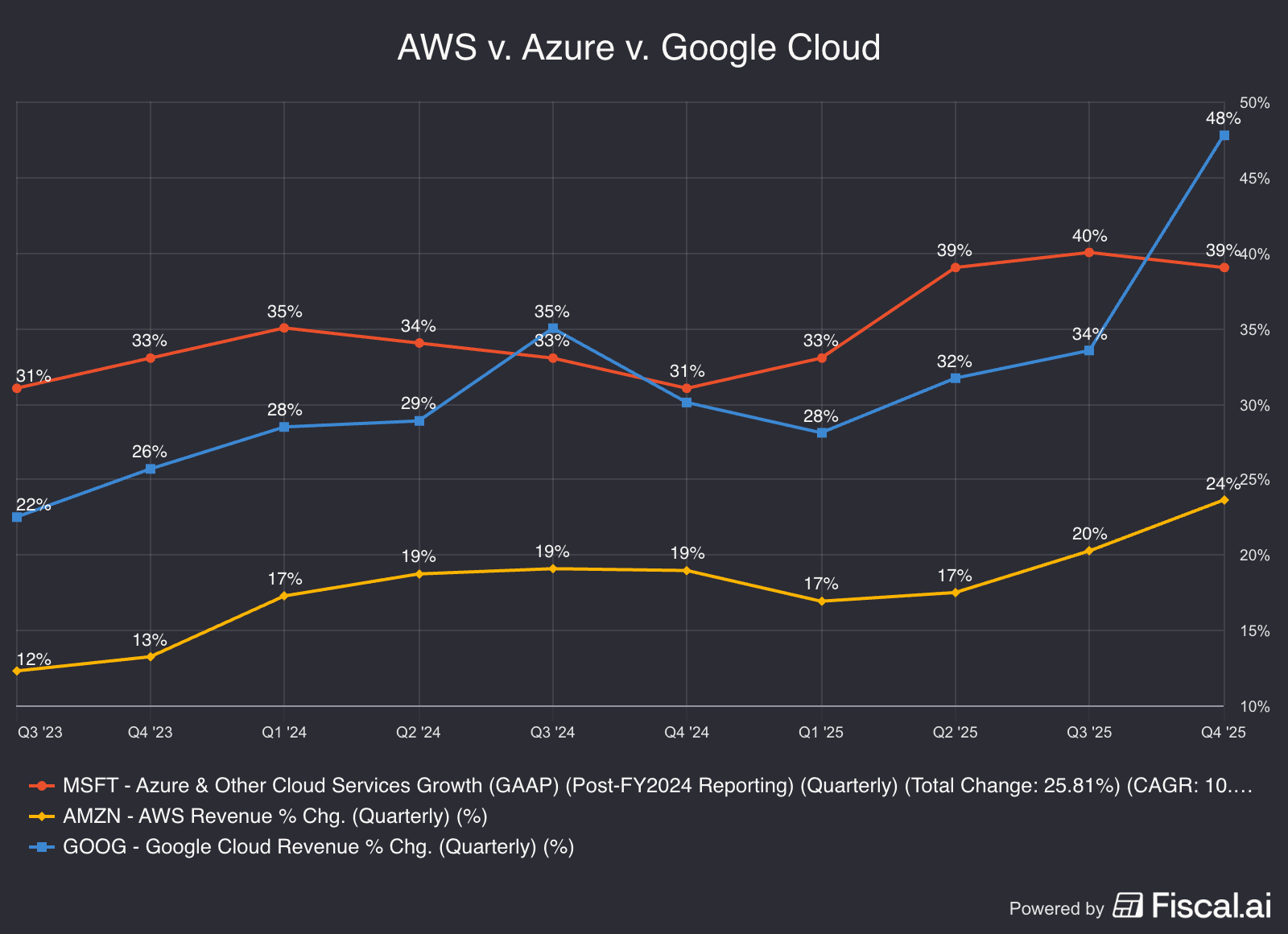
The big 3 “hyperscalers” have all been investing heavily to expand their compute capacity for both internal projects as well as serving outside cloud customers. To put some numbers on it, the combined CapEx of Amazon, Microsoft, and Google has grown from $113 billion to $288 billion over the last 2 years.
Investors have naturally been weary about these costly investments, but all 3 cloud vendors are showing that as fast as they’re building capacity, they’re also booking it.
AWS and Google Cloud both reported large accelerations in revenue growth this quarter, and Microsoft Azure, which is at more than a $75 billion run rate, is still reporting impressive growth at scale.
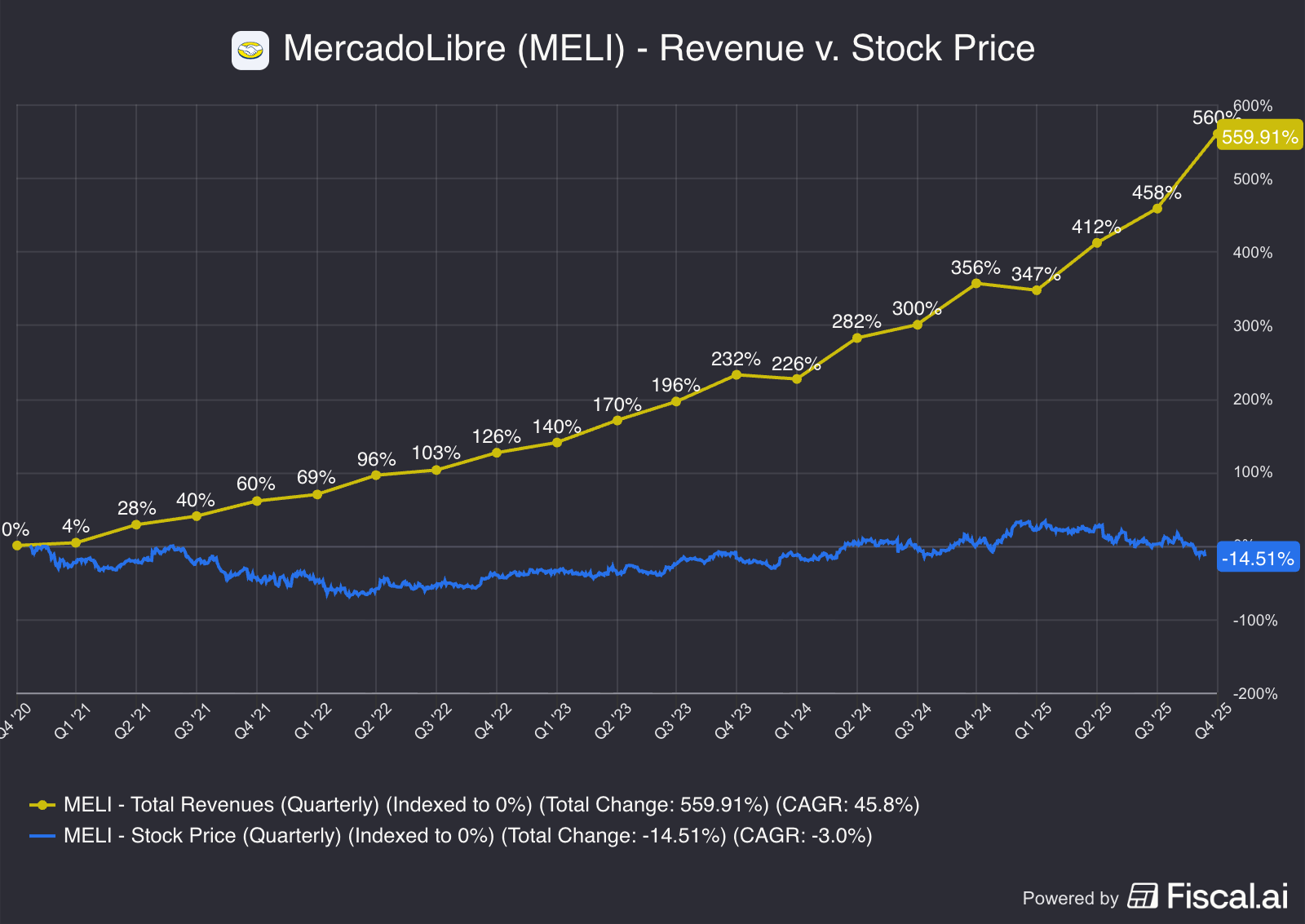
Shares of MercadoLibre are now down 36% from their latest highs.
This stock price collapse comes at a time when the Latin American e-commerce leader is breaking records for revenue growth.
MercadoLibre is the only public company in the world (out of +83,000 public companies) to grow revenue at greater than 30% for more than 22 consecutive quarters. And they’re currently at 28 consecutive quarters.
It’s hard to fathom, but if you invested $10,000 in MercadoLibre 5 years ago, you would now have ~$8,500. Despite the company growing revenue 560% over that time.
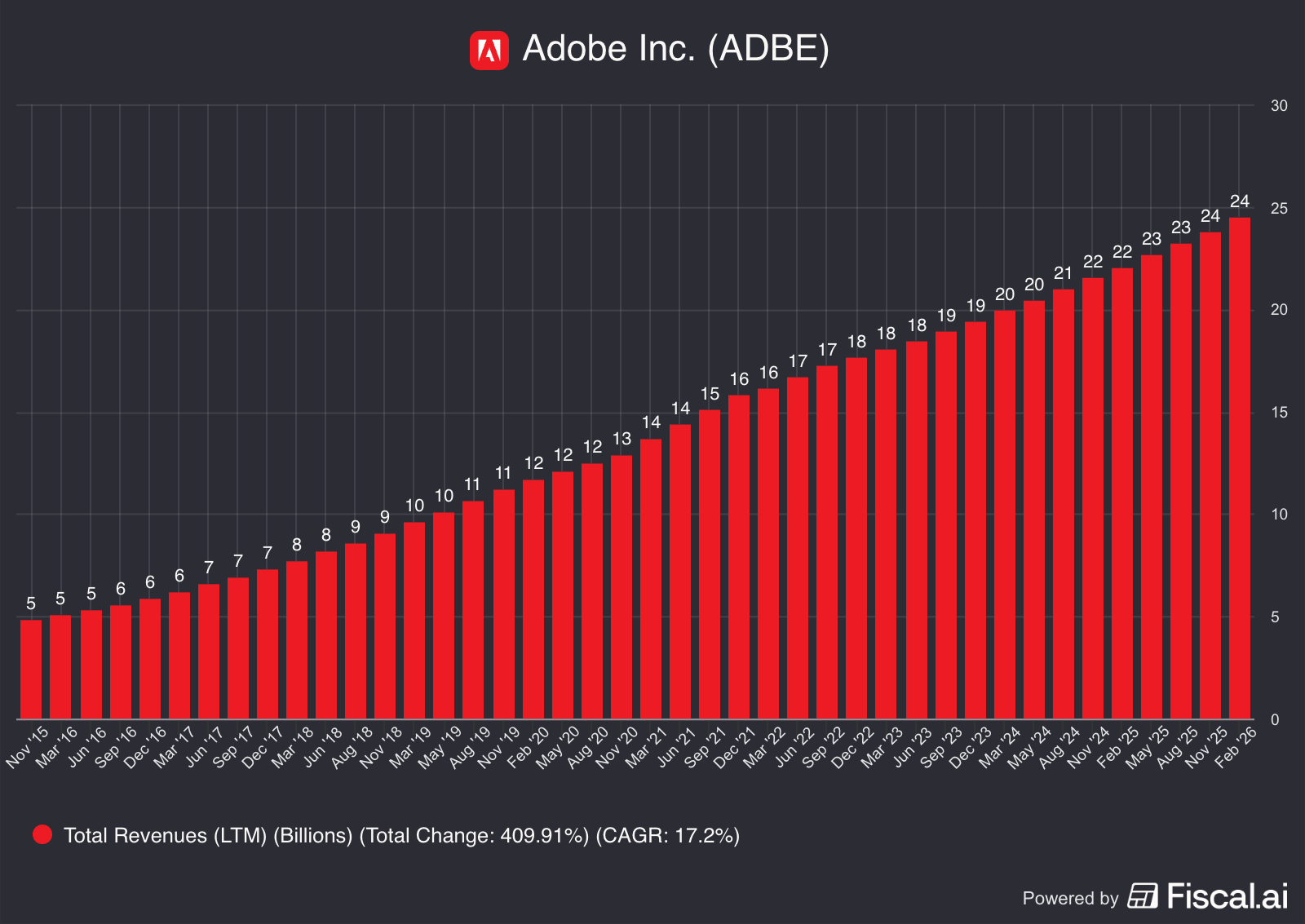
Adobe might be the biggest battleground stock in markets today.
Investors appear to have deemed Adobe an AI loser (shares are down 64% from highs), yet there doesn’t appear to be any signs of weakness from the company financially.
Canva was launched in 2013
Figma was launched in 2016
OpenAI’s first text-to-image model (DALL-E) was launched in 2021
Midjourney was launched in 2022
Nano Banana was launched in August, 2025
The list of new competitors goes on and on.
Yet, Adobe has increased its revenue 5-fold over the last decade. And as of this Thursday’s quarterly report, they’re growing revenue at their fastest in more than 3 years.
What would it take for Mr. Market to change its opinion of Adobe?
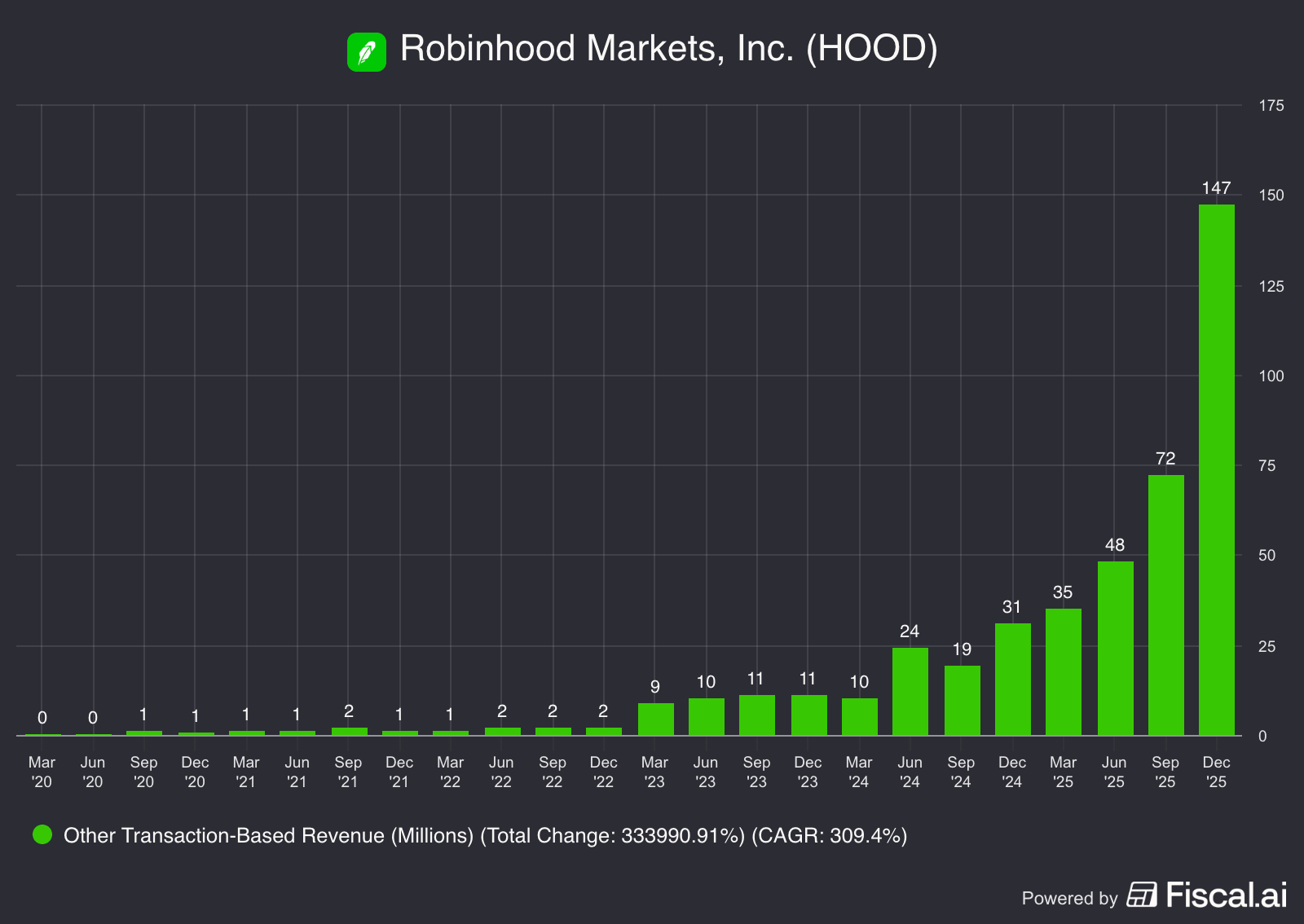
In March of 2025, Robinhood launched a dedicated prediction markets hub within its platform.
In October, the mobile-first brokerage platform announced the addition of over 100 new event contracts covering a wide range of topics, including politics and sports.
That expansion appears to have fueled a massive boost in engagement. “Other Transaction-Based Revenue”, which is now primarily comprised of fees on prediction markets contracts, grew 372% year-over-year and 104% quarter-over-quarter.
Robinhood CEO Vlad Tenev was highly optimistic about this segment during the company’s Q4 conference call: “Prediction markets is the fastest growing business in our history, $300+ million run rate in its first year. I think we're just at the beginning of a prediction market super cycle that could drive trillions in annual volume over time.”
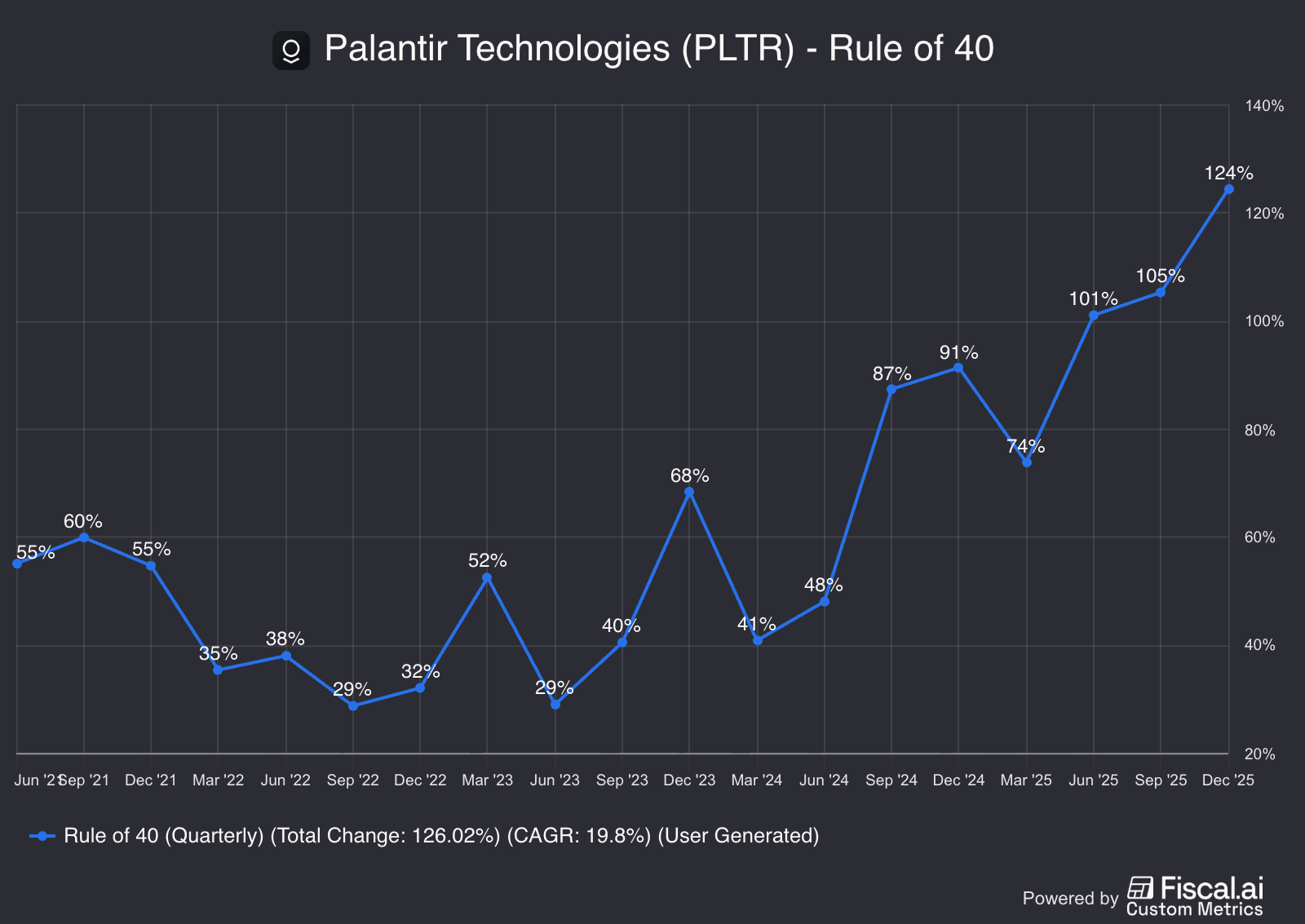
Since November of 2024, Palantir’s price-to-sales ratio has not dropped below 50x.
There’s a saying among value investors that when a company is priced for perfection, they better be perfect. The implication being that if they aren’t perfect, multiple compression will destroy investor returns.
Well, Palantir’s financial performance has been about as close to perfect as you can ask for.
The software industry often focuses on a financial benchmark called the “Rule of 40”, which combines a company’s free cash flow margin and YoY revenue growth rate. In theory, if this combined figure is above 40%, you have a healthy software business.
Palantir now scores a 124% on that benchmark. In their most recent quarter, Palantir accelerated their revenue growth to 70% and boasted a whopping 54% free cash flow margin.
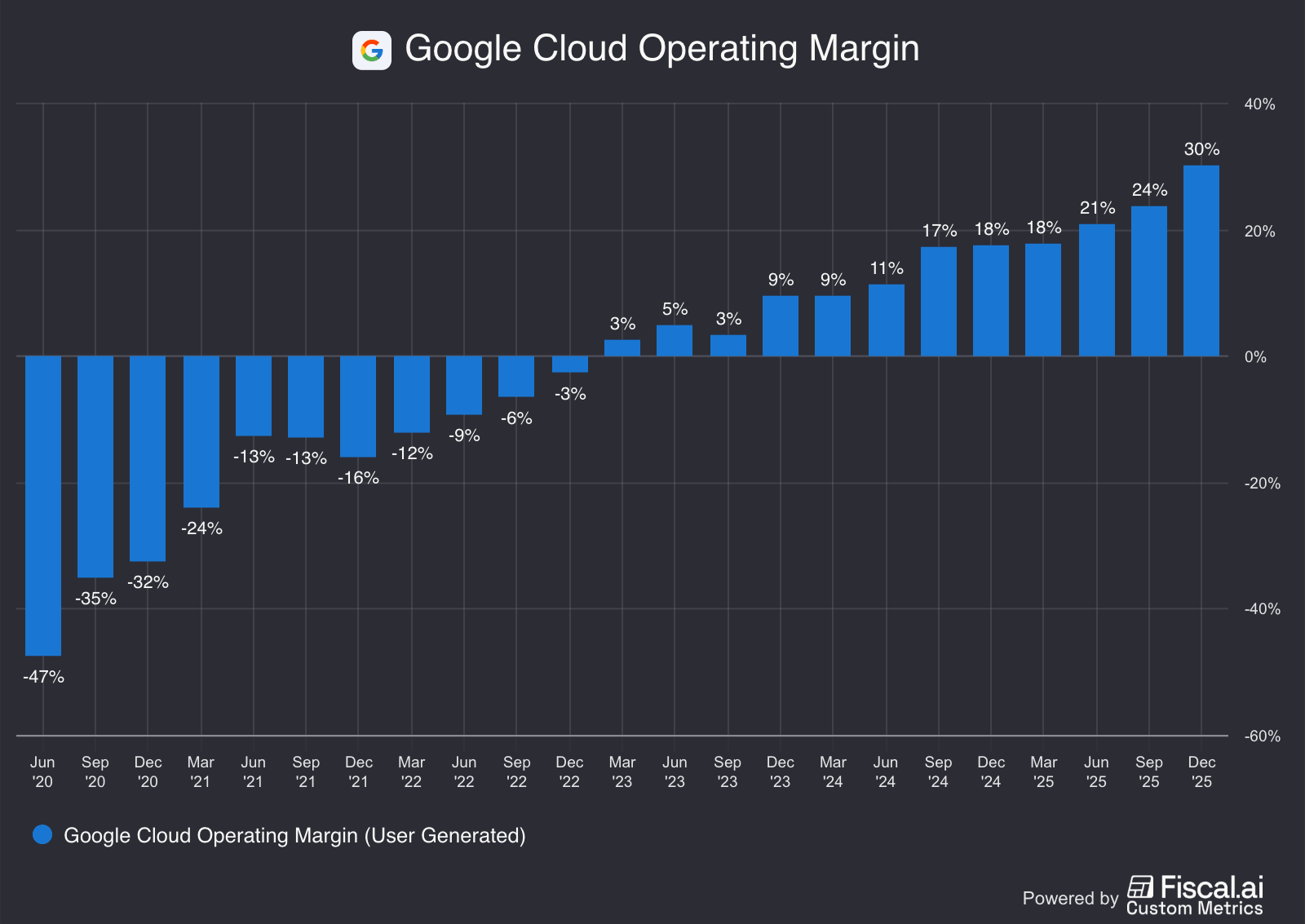
Google Cloud has demonstrated unbelievable operating leverage at scale.
What was once a drag on Google’s financials, now accounts for 15% of Google’s total operating income. And that figure grows with each passing quarter.
Google Cloud is not only the fastest growing hyperscaler on a percentage basis, but they’re also growing faster than Microsoft Azure on a nominal basis as well. Google Cloud is now at a $71 billion revenue run-rate after adding $10 billion in new ARR last quarter alone.
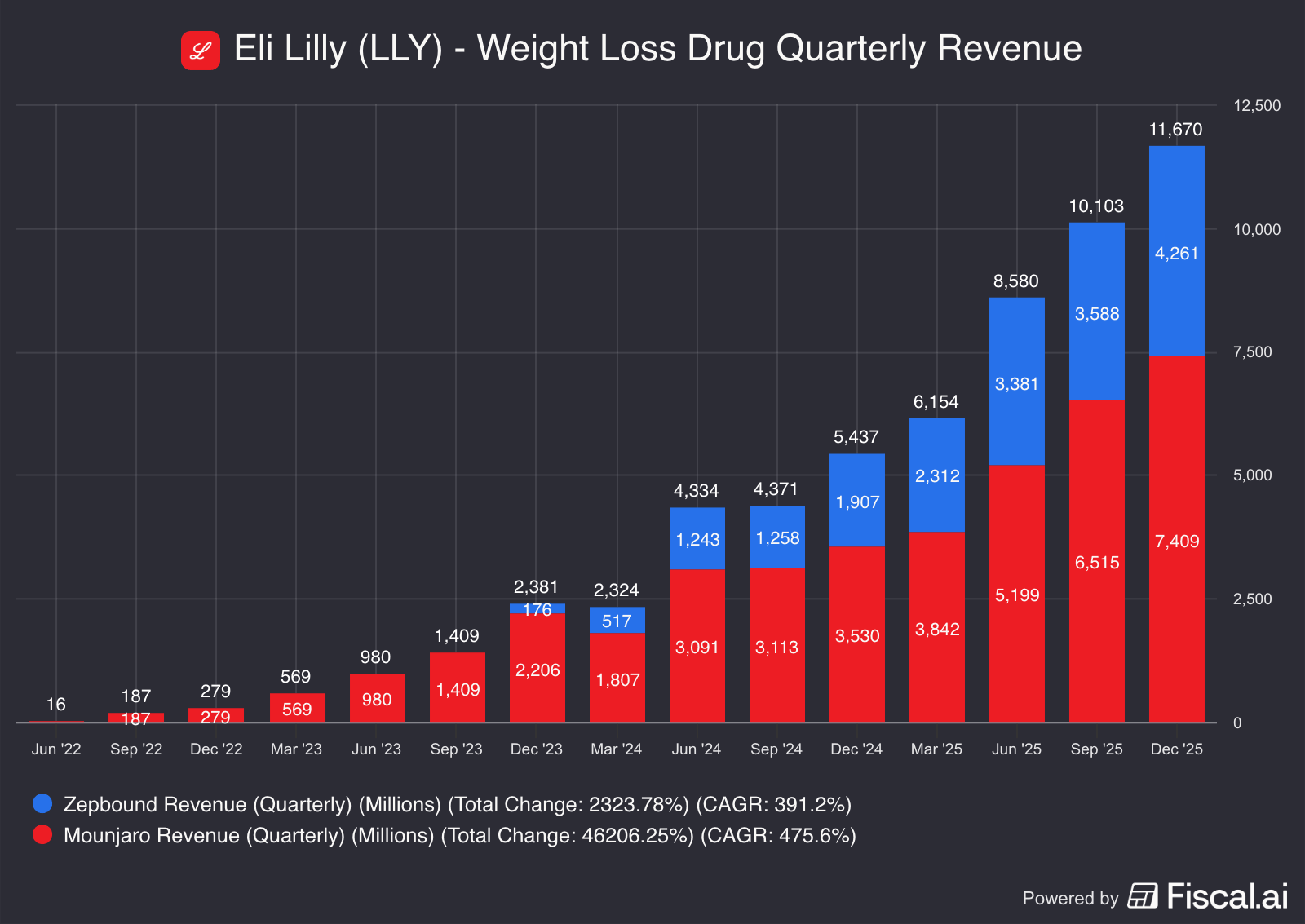
Eli Lilly first entered into the weight-loss drug category in 2022 with the launch of Mounjaro (even though weight-loss was its not its primary purpose). The company followed up by launching Zepbound roughly one year later.
Fast forward to December 2025, and Mounjaro and Zepbound have now both set records as two of the fastest growing drugs in pharmaceutical history. Eli Lilly has gone from generating $16 million in quarterly weight-loss drug revenue to $11.7 billion in just over 3 years.
That’s all for this week.
If there are any charts we missed, please share them by simply replying to this email!